

Artificial Intelligence (AI) is transforming how banks detect and prevent fraud. As digital banking, UPI, and online payments continue to grow, so do the tactics used by fraudsters. Traditional rule-based systems often struggle to keep up with these evolving threats.
AI enables banks to analyze transactions in real time, identify unusual behavior, and stop suspicious activities before they cause financial losses. By combining machine learning with behavioral analytics, banks can improve security, reduce false alerts, and provide a safer banking experience for customers.
Why Use AI for Fraud Detection in Banking?
Online banking fraud is increasing as more people use digital banking, mobile apps, cards, and instant payment systems. Fraudsters are constantly finding new ways to steal money, making it difficult for traditional rule-based systems to detect every threat.
AI helps banks stay ahead by analyzing large volumes of transactions in real time and identifying suspicious activities instantly. Unlike traditional systems, AI learns from customer behavior, adapts to new fraud patterns, and improves its accuracy over time.
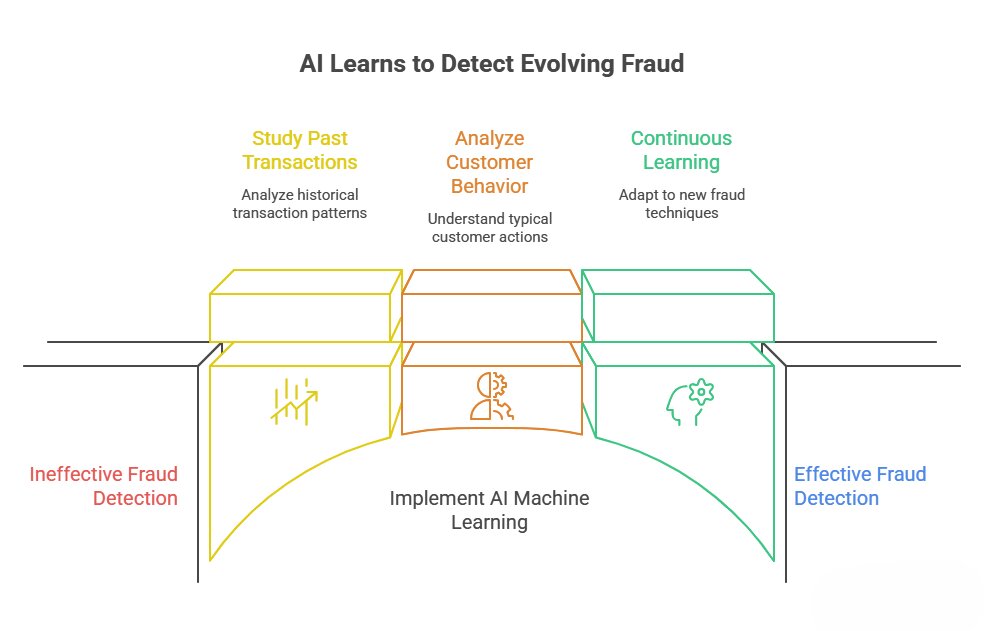
1. Faster and More Accurate Detection
AI can analyze millions of transactions in seconds, helping banks detect suspicious activities quickly and accurately. This reduces manual effort and improves the chances of stopping fraud before it causes financial losses.
2. Real-Time Fraud Detection
AI monitors transactions as they happen. If it detects unusual behavior, such as an unexpected large transfer or login from a new location, it can instantly flag or block the transaction for further review.
3. Learns and Adapts to New Fraud
Unlike traditional rule-based systems, AI uses machine learning to study past transactions and customer behavior. It continuously learns from new data, making it better at identifying new and evolving fraud techniques over time.
4. Better Customer Experience
AI helps reduce false alerts by understanding normal customer behavior more accurately. This means genuine transactions are less likely to be declined, giving customers a smoother and more secure banking experience.
How Does AI Fraud Detection Work in Banking?
AI fraud detection works by analyzing transaction data, learning customer behavior, and identifying suspicious activities in real time. Instead of relying only on fixed rules, AI continuously improves its ability to detect fraud as new data becomes available.
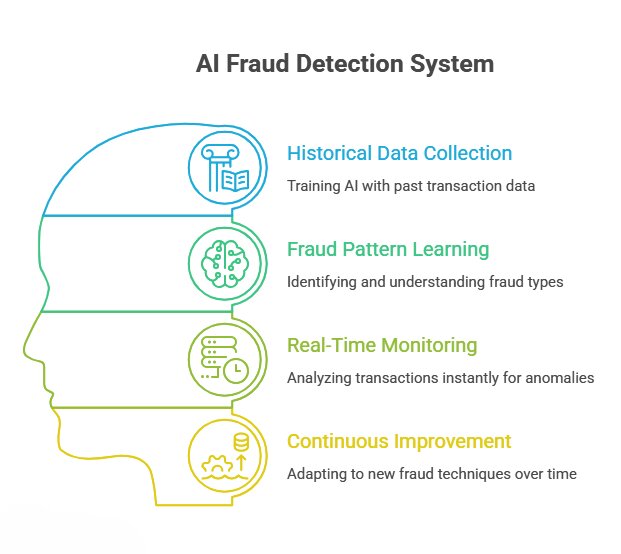
1. Collects Historical Data
The AI system is trained using past banking data, including both legitimate and fraudulent transactions. This helps it understand the difference between normal customer behavior and suspicious activity.
2. Learns Fraud Patterns
Using machine learning, AI studies different types of fraud, such as unusual spending, account takeovers, and suspicious money transfers. The more data it processes, the better it becomes at recognizing fraud patterns.
3. Monitors Transactions in Real Time
Every new transaction is analyzed instantly. If AI detects unusual behavior—such as a login from a new location, a sudden high-value transfer, or an abnormal spending pattern—it can flag the transaction for review or trigger an alert.
4. Continuously Improves
AI keeps learning from new transactions and confirmed fraud cases. This allows it to adapt to changing fraud techniques, improve detection accuracy, and reduce false alerts over time.
Common Banking Frauds AI Can Detect
As digital banking grows, fraudsters are using more advanced techniques to target banks and customers. AI helps banks detect these threats quickly by analyzing customer behavior, transaction patterns, and account activity in real time.
Identity Theft
Identity theft happens when fraudsters gain access to a customer’s banking account and change important details such as passwords, phone numbers, or email addresses.
AI learns a customer’s normal behavior and can quickly detect unusual account changes or login attempts. It can then trigger alerts, require multi-factor authentication (MFA), or temporarily block suspicious activity to protect the account.
Phishing Attacks
Phishing scams trick people into sharing sensitive information through fake emails, text messages, or websites that appear to be from trusted organizations.
AI can identify suspicious emails, messages, and links by analyzing patterns and known fraud indicators. It helps warn customers before they become victims of phishing attacks.
Credit Card Fraud
Stolen card details are often used to make unauthorized purchases or online payments.
AI continuously monitors card transactions and compares them with the customer’s usual spending habits. If it detects an unusual purchase, location, or transaction amount, it can instantly flag the activity, send an alert, or decline the transaction until it is verified.
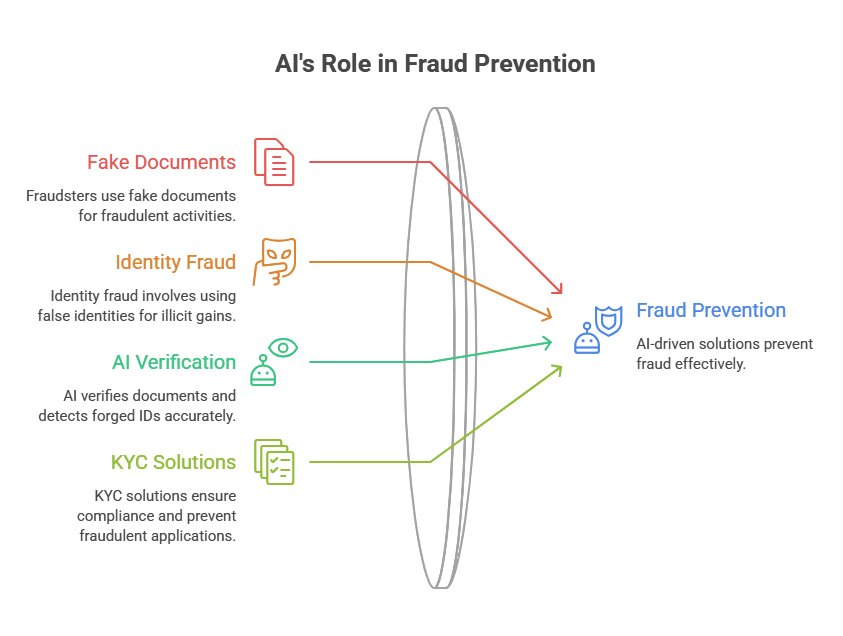
Fake Documents and Identity Fraud
Fraudsters may use fake identity documents or forged signatures to open accounts or apply for loans.
AI-powered identity verification and KYC solutions can verify documents, detect forged IDs, and identify fake applications with high accuracy. This helps banks prevent fraud before an account is even opened.
Why AI Matters for Modern Banks
Fraud techniques are constantly changing, making it difficult for traditional systems to keep up. AI continuously learns from new data, helping banks detect emerging fraud patterns, reduce financial losses, and improve customer trust. By combining real-time monitoring, machine learning, and behavioral analytics, AI enables banks to stay one step ahead of fraudsters while delivering a safer and smoother banking experience.
How Can IDYC360 Help with AI-Powered Fraud Detection?
IDYC360 helps banks, fintechs, NBFCs, and payment providers detect and prevent financial fraud using AI-powered fraud detection and real-time transaction monitoring.
Our platform continuously analyzes transactions, customer behavior, device signals, and network connections to identify suspicious activities before they become financial losses. Using AI, machine learning, and behavioral analytics, IDYC360 detects evolving fraud patterns, account takeovers, mule accounts, identity fraud, and unusual transaction behavior with high accuracy.
With real-time risk scoring, instant alerts, and intelligent decision-making, IDYC360 helps organizations reduce false positives, speed up fraud investigations, strengthen regulatory compliance, and protect customers from emerging financial threats.
Whether you’re processing thousands or millions of transactions every day, IDYC360 provides the intelligence needed to stay ahead of fraud while delivering a secure and seamless digital banking experience.
Conclusion
AI is changing how banks approach fraud detection by moving beyond fixed rules toward real-time, intelligent, and adaptive risk analysis. By analyzing transactions, customer behavior, and emerging fraud patterns, AI helps financial institutions detect suspicious activity faster, reduce false positives, and respond to threats more effectively.
For modern banks, AI-powered fraud detection is not just about preventing financial losses—it is also about protecting customers, strengthening compliance, and building trust in digital banking.
With real-time monitoring, machine learning, behavioral analytics, and intelligent risk scoring, solutions such as IDYC360 help banks stay prepared for evolving financial threats while supporting a safer and more secure financial ecosystem.
Frequently Asked Questions (FAQs)
1. What is AI-powered fraud detection in banking?
AI-powered fraud detection uses artificial intelligence, machine learning, and behavioral analytics to analyze banking transactions and customer activity. It helps identify unusual patterns and suspicious behavior in real time.
2. How does AI detect banking fraud?
AI analyzes transaction data, customer behavior, device signals, locations, and other risk indicators. It compares current activity with established behavior patterns to identify potentially fraudulent transactions.
3. Can AI detect fraud in real time?
Yes. AI-powered fraud detection systems can analyze transactions as they occur and generate risk scores, alerts, or automated decisions when suspicious activity is identified.
4. What types of banking fraud can AI detect?
AI can help detect several types of fraud, including identity fraud, account takeover, card fraud, suspicious money transfers, mule account activity, unusual transaction behavior, and other emerging fraud patterns.
5. How does AI reduce false positives?
AI can analyze multiple behavioral and transactional signals instead of relying only on fixed rules. This provides better context around each transaction and helps distinguish legitimate activity from genuinely suspicious behavior.
Ready to Stay
Compliant—Without Slowing Down?
Move at crypto speed without losing sight of your regulatory obligations.
With IDYC360, you can scale securely, onboard instantly, and monitor risk in real time—without the friction.



Related to this topic:

Common Fraud Detection Rules Used by Banks and Fintechs