

Introduction
Fraud scoring is a risk assessment method that helps organizations identify the likelihood of fraudulent transactions, accounts, or user activities. By analyzing multiple risk factors—such as transaction patterns, user behavior, device information, and location data—it assigns a risk score that enables faster and more informed decisions for fraud detection. As digital fraud becomes increasingly sophisticated, fraud scoring plays a vital role in detecting suspicious activities, reducing false positives, and strengthening fraud prevention. In this guide, we’ll explain what fraud scoring is, how it works, and why it is essential for modern businesses.
What Is a Fraud Score?
A fraud score is a numerical risk rating that helps organizations determine how likely a user, transaction, or activity is to be fraudulent. It is calculated by analyzing multiple risk indicators and assigning points based on known data about the user and their behavior.
Fraud scoring systems evaluate factors such as device information, IP address, connection type, geographic location, email reputation, transaction history, and behavioral patterns. For example, a login attempt from a high-risk location, a device linked to previous fraud cases, or an email address found on fraud watchlists may increase the fraud score.
The higher the fraud score, the greater the potential risk. Businesses use these scores to identify suspicious activities, prioritize investigations, and make faster, more informed decisions while minimizing disruptions for legitimate customers.
How Does Fraud Scoring Work?
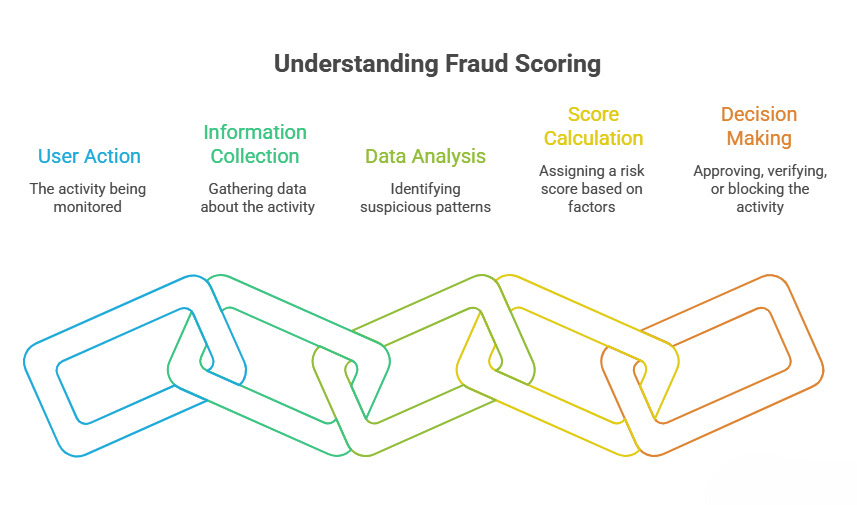
Fraud scoring helps businesses determine whether a user action is likely to be genuine or potentially fraudulent. It works by collecting information about an activity and assigning a risk score based on various factors. The higher the score, the higher the risk of fraud.
Here is a simple breakdown of the process:
- A User Takes an Action
This could be creating an account, logging in, making a payment, or changing account details. - The System Collects Information
The fraud detection system gathers details such as the user’s device, location, IP address, email address, and transaction information. - The Information Is Analyzed
The system looks for signs that may indicate suspicious activity. For example:- Is the login coming from an unusual location?
- Has the device been linked to fraud before?
- Is the email address trustworthy?
- Is the user’s behavior different from normal?
- A Fraud Score Is Calculated
Each risk factor adds or removes points. The system then calculates an overall fraud score based on all available information. - A Decision Is Made
Depending on the score, the system can:- Approve the activity if the risk is low
- Request additional verification if the risk is moderate
- Block or flag the activity if the risk is high
Example
Imagine a customer who usually logs in from Delhi using the same mobile phone. If a login attempt suddenly comes from another country using a new device, the system may assign a higher fraud score because the activity looks unusual. The business can then request extra verification before allowing access.
Why It Is Important
Fraud scoring helps businesses stop fraud faster, reduce financial losses, and protect customer accounts while ensuring that genuine users can complete their transactions with minimal disruption.
Benefits of Fraud Scoring
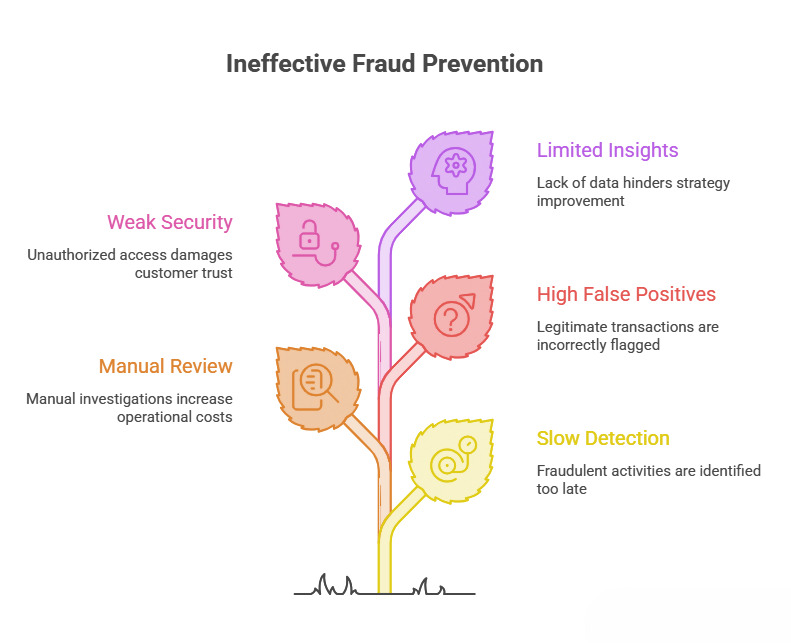
Fraud scoring helps organizations identify and prevent fraudulent activities while ensuring a smooth experience for legitimate customers. Some of the key benefits include:
- Early Fraud Detection
Identifies suspicious activities in real time, helping organizations stop fraud before financial losses occur. - Faster Decision-Making
Automatically evaluates risk levels and enables quick approval, rejection, or review of transactions and user activities. - Improved Operational Efficiency
Reduces the need for manual investigations by automatically filtering low-risk and high-risk activities. - Enhanced Customer Experience
Allows genuine customers to complete transactions with minimal delays while applying additional checks only when necessary. - Reduced Financial Losses
Helps prevent chargebacks, unauthorized transactions, account takeovers, and other fraud-related losses. - Lower False Positives
Improves detection accuracy, reducing the number of legitimate transactions incorrectly flagged as fraudulent. - Stronger Account Security
Detects unusual login attempts, suspicious devices, and unauthorized account access before damage occurs. - Better Risk Management
Provides a clear view of risk levels across users, accounts, and transactions, enabling more informed decisions. - Support for Regulatory Compliance
Helps organizations strengthen AML/CFT, KYC, and fraud prevention controls while meeting regulatory requirements. - Scalability for Business Growth
Enables businesses to handle increasing transaction volumes without significantly increasing fraud management costs. - Protection of Brand Reputation
Prevents fraud incidents that could damage customer trust and harm the organization’s reputation. - Real-Time Monitoring
Continuously analyzes customer activities and transaction patterns through real-time monitoring, helping organizations detect emerging threats as they happen. - Data-Driven Insights
Provides valuable information about fraud trends and risk patterns, helping organizations improve their fraud prevention strategies over time.
By using fraud scoring, organizations can reduce fraud risk, improve security, protect customers, and create a safer and more reliable digital experience.
Challenges and Limitations of Fraud Scoring
While fraud scoring is highly effective, it also has some limitations that organizations should consider:
- False Positives – Legitimate transactions may be incorrectly flagged as fraudulent, causing inconvenience for customers.
- False Negatives – Some fraudulent activities may go undetected, leading to financial losses.
- Evolving Fraud Tactics – Fraudsters constantly develop new techniques, making fraud detection an ongoing challenge.
- Data Quality Issues – Inaccurate or incomplete data can reduce the accuracy of fraud scores.
- Privacy Concerns – Organizations must handle customer data responsibly and comply with data protection regulations.
- Balancing Security and User Experience – Strong fraud controls can sometimes create friction for genuine users.
- High Operational Costs – Implementing and maintaining fraud scoring systems requires ongoing investment and monitoring.
- Dependence on Historical Data – New fraud patterns may be difficult to detect if they do not match previous behavior.
Examples of Fraud Scoring in Different Industries
Fraud scoring is used across many industries to identify suspicious activities, reduce financial losses, and improve security. Here are some common examples:
Banking and Financial Services
Banks use fraud scoring to evaluate transactions, account activity, loan applications, and online banking logins. If a transaction appears unusual or originates from a high-risk location, the system can trigger additional verification or block the activity.
Payment Processors
Payment providers use fraud scoring to detect suspicious payment attempts, card-not-present fraud, and potential chargebacks. High-risk transactions can be flagged for review before payment is approved.
Cryptocurrency Platforms
Crypto exchanges and wallet providers use fraud scoring to identify unusual trading activity, suspicious withdrawals, and potential money laundering risks. This helps protect both users and the platform from financial crime.
Fintech Companies
Fintech firms apply fraud scoring to digital onboarding, loan applications, peer-to-peer payments, and account creation. By analyzing customer behavior and risk indicators, they can detect fraudulent applications and improve decision-making.
E-Commerce and Online Retail
Online retailers use fraud scoring to identify fraudulent purchases, fake accounts, and payment fraud. This helps reduce chargebacks while ensuring a smooth shopping experience for genuine customers.
Insurance Companies
Insurance providers use fraud scoring to assess claims and detect suspicious patterns that may indicate false or exaggerated claims, helping reduce fraud-related losses.
Telecommunications
Telecom providers use fraud scoring to detect SIM swap fraud, account misuse, and unauthorized access to customer accounts, protecting users from identity theft and financial fraud.
Key Risk Signals Used in Fraud Scoring
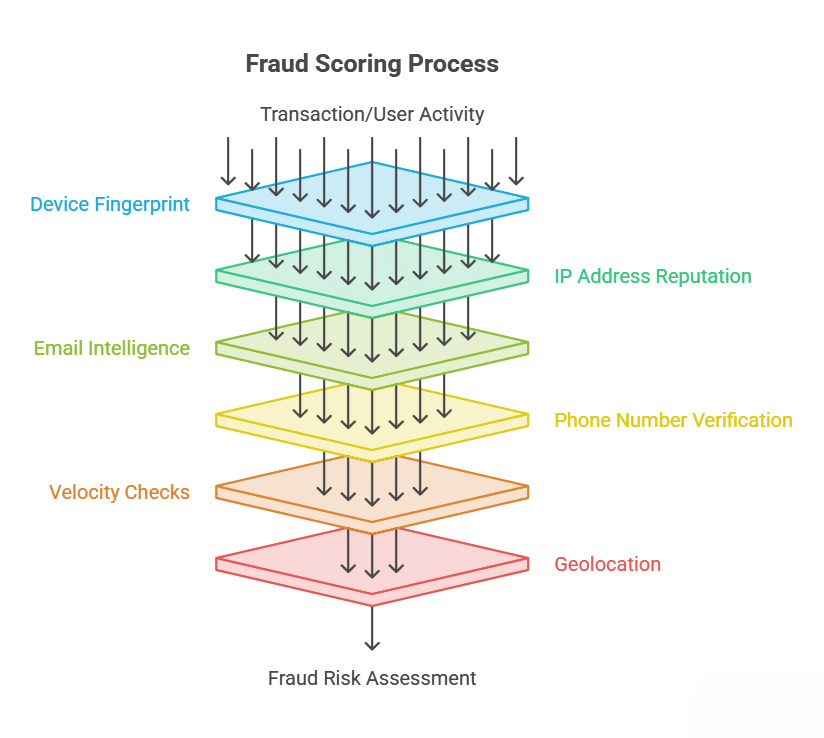
d scoring systems evaluate multiple risk signals to determine whether a transaction or user activity is legitimate or potentially fraudulent. By analyzing these signals together, organizations can identify suspicious behavior more accurately and make informed decisions.
1. Device Fingerprint
Identifies a user’s device based on its unique characteristics. If an unknown or previously flagged device is used, the fraud risk may increase.
2. IP Address Reputation
Checks whether the IP address has a history of suspicious or malicious activity. High-risk IPs may indicate potential fraud.
3. Email Intelligence
Evaluates the trustworthiness of an email address by analyzing factors such as its age, reputation, and association with previous fraud cases.
4. Phone Number Verification
Verifies whether a phone number is valid, active, and linked to genuine user activity. It also helps identify virtual or suspicious numbers.
5. Velocity Checks
Monitors how frequently actions such as logins, payments, or account registrations occur within a short period. Unusual activity may indicate fraud.
6. Geolocation
Compares the user’s current location with their typical activity. Transactions from unexpected locations may be flagged for review.
7. Behavioral Biometrics
Analyzes user behavior, such as typing patterns, mouse movements, and touchscreen interactions, to detect unusual or suspicious activity.
8. Transaction History
Compares current transactions with past behavior. Significant changes in spending patterns or transaction amounts may indicate fraud.
9. Known Fraud Databases
Checks whether a user, device, email, or payment method appears in databases of previously identified fraudulent activity.
10. Blacklists and Watchlists
Screens users and transactions against sanctions lists, fraud watchlists, and other high-risk databases to identify potential threats and support regulatory compliance.
Why These Risk Signals Matter
No single indicator can accurately identify fraud. By combining multiple risk signals, fraud scoring systems provide a more reliable assessment of risk, helping organizations detect fraud faster, reduce false positives, and protect both their business and customers.
Conclusion
Fraud scoring has become a critical component of modern fraud prevention. By analyzing multiple risk signals such as device information, user behavior, location, and transaction patterns, organizations can identify suspicious activities quickly while minimizing friction for legitimate customers. As financial crime continues to evolve, businesses need intelligent, real-time fraud scoring systems that can adapt to emerging threats and changing risk patterns.
A well-designed fraud scoring solution not only helps reduce financial losses but also improves operational efficiency, strengthens security, enhances customer trust, and supports regulatory compliance. When combined with advanced analytics and continuous monitoring, fraud scoring enables organizations to make faster, more accurate risk decisions and build a safer digital environment.
Frequently Asked Questions (FAQs)
1. What is fraud scoring?
Fraud scoring is a method of evaluating the risk level of a transaction, user, or account. It assigns a numerical score based on multiple risk factors to help organizations detect potentially fraudulent activities.
2. How is a fraud score calculated?
A fraud score is calculated by analyzing various risk signals, including device information, IP address, geolocation, email reputation, user behavior, transaction history, and other indicators. Each factor contributes to the overall risk score.
3. Why is fraud scoring important?
Fraud scoring helps organizations detect fraud faster, reduce financial losses, improve customer experience, minimize false positives, strengthen security, and support regulatory compliance.
4. What does a high fraud score mean?
A high fraud score indicates that a transaction or user activity has a greater likelihood of being fraudulent. Depending on the organization’s policies, the activity may be approved with additional verification, flagged for manual review, or blocked.
Ready to Stay
Compliant—Without Slowing Down?
Move at crypto speed without losing sight of your regulatory obligations.
With IDYC360, you can scale securely, onboard instantly, and monitor risk in real time—without the friction.


Related to this topic:

Smarter Fraud Detection for Banks with AI

Common Fraud Detection Rules Used by Banks and Fintechs