

 Home
Every second, millions of financial transactions take place across banks, fintech platforms, payment providers, and other financial institutions. From a simple UPI payment to a large business transfer, money moves continuously between accounts.
However, not every transaction is legitimate.
Behind seemingly normal financial activities, there may be hidden risks involving fraudulent accounts, money mule networks, suspicious fund transfers, and organised financial crime.
For financial institutions, the challenge is not just identifying suspicious transactions but detecting them at the right time. A delay in identifying unusual activity can allow funds to move through multiple accounts, making investigations more complicated.
This is where Real-Time Transaction Monitoring becomes essential.
In today’s digital financial environment, every millisecond matters. The ability to analyse transactions quickly, recognise unusual patterns, and identify potential risks can make a significant difference in financial fraud prevention.
What Is Real-Time Transaction Monitoring?
Real-time transaction monitoring is the process of analysing financial transactions as they occur to identify unusual patterns, suspicious behaviour, and potential financial risks.
Unlike traditional monitoring approaches that may depend on scheduled reviews or delayed processing, real-time monitoring systems evaluate transaction activities as they enter the monitoring environment.
These systems can analyse multiple factors, including:
- Transaction amounts and frequency.
- Payer and beneficiary information.
- Account activity and behavioural patterns.
- Geographical inconsistencies.
- Previous suspicious transaction history.
- Relationships between potentially connected accounts.
By evaluating these factors together, financial institutions can identify activities that may require further investigation.
The objective is to move beyond reviewing completed transactions and identify potential risks while financial activity is taking place.
Why Does Every Millisecond Matter?
Consider a simple example.
A customer receives money from an unfamiliar account. Within seconds, the funds are transferred to another account. Shortly afterwards, the money moves through several additional accounts.
Individually, these transactions may appear normal.
However, when analysed together, they may reveal a suspicious pattern involving multiple connected entities.
If a monitoring system identifies the risk only after several transfers have taken place, the opportunity for timely intervention may already be reduced.
This highlights why processing speed and timely risk identification are critical.
1. Fraud Can Move Faster Than Traditional Monitoring
Financial fraud does not always happen through a single suspicious transaction.
Criminal networks may distribute funds across multiple accounts, using rapid transfers to make the movement of money harder to identify.
When monitoring depends on delayed processing, suspicious activities may remain undetected until funds have already moved through several accounts.
Real-time monitoring helps reduce this delay by analysing transaction activity as it happens.
2. Delayed Detection Can Increase Financial Exposure
The faster suspicious activity is identified, the sooner financial institutions can initiate appropriate review and response procedures.
Even a short delay can allow additional transactions to take place, potentially increasing financial exposure.
Real-time intelligence gives institutions an opportunity to assess risks earlier and support timely decision-making.
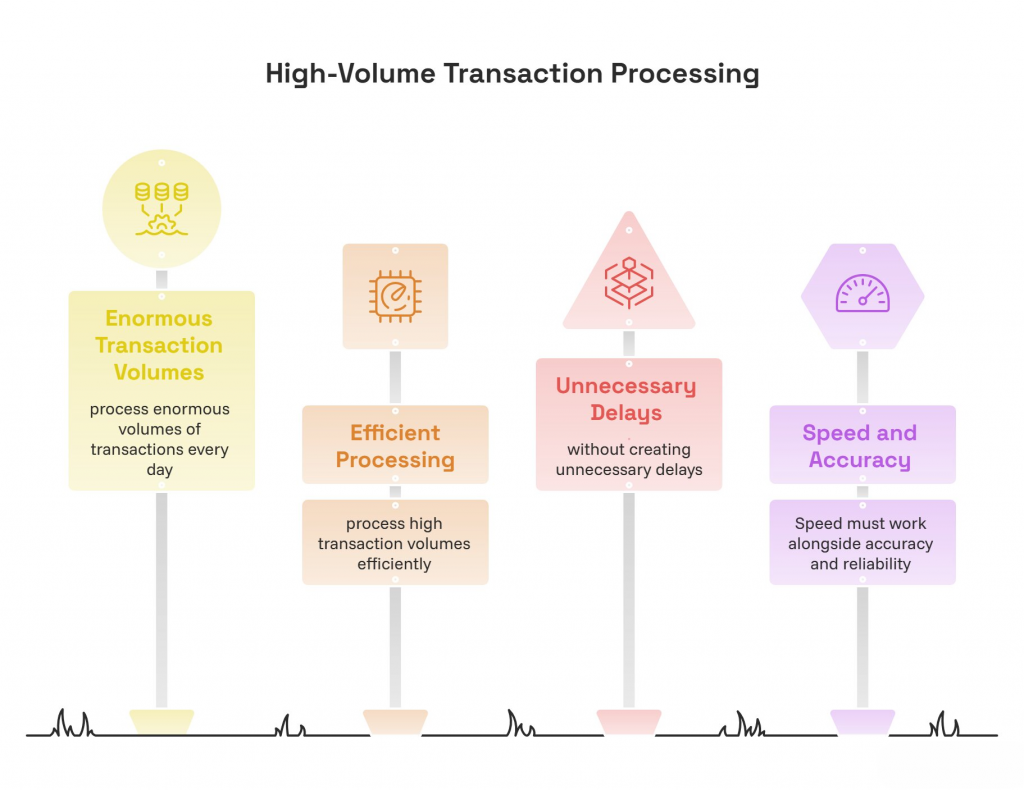
3. High Transaction Volumes Require Faster Processing
Modern financial institutions process enormous volumes of transactions every day.
A monitoring solution must therefore do more than identify suspicious patterns. It must also process high transaction volumes efficiently without creating unnecessary delays.
This requires efficient data processing, scalable infrastructure, and intelligent risk-scoring capabilities.
Speed must work alongside accuracy and reliability.
Why Traditional Transaction Monitoring May Not Be Enough
Traditional transaction monitoring systems have played an important role in financial crime prevention. However, evolving fraud techniques and increasing transaction volumes are creating new challenges.
Some common limitations include:
Delayed Analysis: Systems that depend heavily on periodic reviews may identify suspicious activities after transactions have already been completed.
Limited Transaction Visibility: Analysing transactions individually may make it difficult to identify relationships between seemingly unrelated accounts.
Static Detection Rules: Fraud patterns continuously evolve, while fixed rules may struggle to adapt to changing behavioural patterns.
High False-Positive Volumes: Excessive alerts can increase investigation workloads and make it harder for compliance teams to prioritise genuine risks.
Limited Contextual Intelligence: A transaction amount alone rarely provides enough information to understand the complete risk associated with an activity.
Addressing these limitations requires a more intelligent approach that combines transaction-level analysis with behavioural, geographical, and entity-level intelligence.
How AI Strengthens Real-Time Transaction Monitoring
Artificial Intelligence (AI) and Machine Learning (ML) are changing how financial institutions identify and assess suspicious financial activities.
Instead of relying exclusively on predefined rules, AI-powered monitoring systems can analyse large volumes of transactional data and identify patterns that may indicate unusual behaviour.
Some important capabilities include:
1. Behavioural Analytics
AI models can analyse historical and current transaction behaviour to identify deviations from established activity patterns.
For example, an account that usually receives small payments but suddenly begins receiving frequent high-value transfers may require additional scrutiny.
Behavioural analytics helps financial institutions understand not just what a transaction looks like, but whether it is consistent with the account’s usual activity.
2. Predictive Risk Scoring
Machine Learning models can evaluate multiple risk indicators and generate risk scores to help financial institutions prioritise suspicious activities.
These scores can support faster and more informed investigation decisions.
By considering different risk factors together, institutions can develop a more comprehensive understanding of potential threats.
3. Network and Relationship Analysis
Financial fraud often involves multiple interconnected accounts.
Network analytics can help identify relationships between payers, beneficiaries, accounts, and other entities.
For example, several accounts may appear unrelated individually but could be connected through repeated fund transfers or shared financial relationships.
Analysing these connections helps financial institutions identify potentially suspicious networks that may remain hidden when transactions are reviewed in isolation.
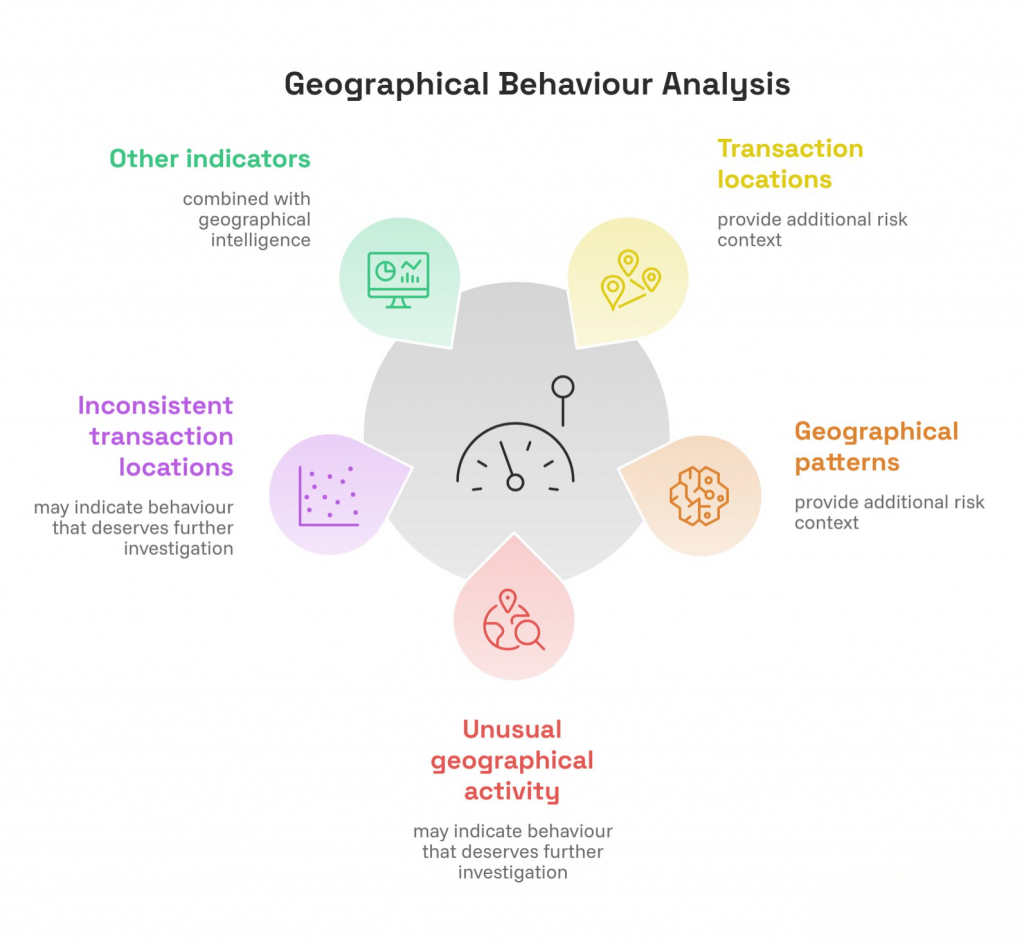
4. Geographical Behaviour Analysis
Transaction locations and geographical patterns can provide additional risk context.
For instance, unusual geographical activity or inconsistent transaction locations may indicate behaviour that deserves further investigation.
When combined with other indicators, geographical intelligence can strengthen the overall risk assessment.
Beyond Speed: Accuracy, Context, and Explainability
Real-time transaction monitoring should not focus on speed alone.
A system that processes transactions quickly but generates excessive false alerts can create additional pressure on fraud and compliance teams.
Effective monitoring requires a balance between several important factors:
- Speed: Analysing transactions with minimal processing delays.
- Accuracy: Identifying meaningful suspicious patterns.
- Context: Understanding relationships between accounts and entities.
- Scalability: Supporting growing transaction volumes.
- Explainability: Providing understandable reasons behind risk scores and alerts.
This combination allows financial institutions to move towards more proactive and intelligence-driven financial crime prevention.
What Financial Institutions Need in a Modern Transaction Monitoring System
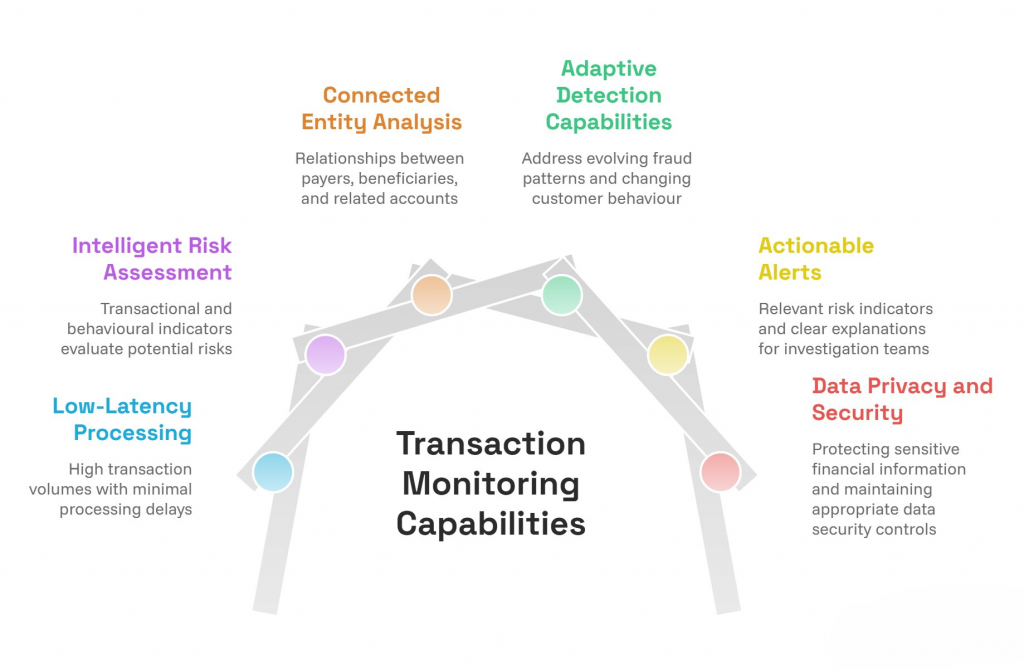
Modern financial institutions need monitoring systems that combine speed, intelligence, and reliability.
An effective transaction monitoring approach should include the following capabilities:
Low-Latency Processing: Analysing high transaction volumes with minimal processing delays.
Intelligent Risk Assessment: Combining multiple transactional and behavioural indicators to evaluate potential risks.
Connected Entity Analysis: Identifying suspicious relationships between payers, beneficiaries, and related accounts.
Adaptive Detection Capabilities: Improving monitoring approaches to address evolving fraud patterns and changing customer behaviour.
Actionable Alerts: Providing investigation teams with relevant risk indicators and clear explanations so they can prioritise alerts effectively.
Data Privacy and Security: Protecting sensitive financial information and maintaining appropriate data security controls.
Combining these capabilities allows financial institutions to move beyond individual transaction reviews and develop a broader understanding of financial activities.
Conclusion: The Future of Transaction Monitoring Is Real-Time and Intelligence-Driven
As digital payments continue to grow, financial transactions are becoming faster, more frequent, and increasingly interconnected. At the same time, financial criminals are developing more sophisticated methods to move funds across multiple accounts and avoid detection.
In this environment, delayed monitoring and isolated transaction analysis may not be sufficient to identify emerging financial risks.
Financial institutions need monitoring capabilities that can process transactions efficiently, recognise unusual behaviour, identify connected entities, and provide meaningful risk insights.
Real-time transaction monitoring is therefore more than a technological advancement. It is an essential component of modern financial security and financial crime prevention.
However, speed alone cannot solve every challenge. Effective fraud detection requires the right combination of processing efficiency, behavioural analytics, network intelligence, accuracy, and explainability.
Because in financial fraud prevention, identifying a suspicious transaction matters. But identifying it at the right time, understanding its connections, and responding with the right intelligence matter even more.
As financial crime continues to evolve, the ability to turn transaction data into timely, actionable intelligence will play an increasingly important role in protecting the financial ecosystem.
Frequently Asked Questions (FAQs)
1. What is Real-Time Transaction Monitoring?
Real-time transaction monitoring is the process of analysing financial transactions as they occur to identify suspicious activities, unusual patterns, and potential financial risks.
2. Why is Real-Time Transaction Monitoring important?
It helps financial institutions identify suspicious transactions at an early stage, reduce detection delays, and support timely action against potential financial fraud.
3. How does AI improve transaction monitoring?
AI and Machine Learning analyse large volumes of transaction data, identify unusual behavioural patterns, assess potential risks, and help detect suspicious activities more effectively.
4. What types of suspicious activities can transaction monitoring detect?
Transaction monitoring can help identify unusual transaction frequency, unexpected high-value transfers, suspicious fund movements, potentially connected accounts, and unusual geographical activity.
5. How does real-time monitoring help prevent financial fraud?
It analyses transactions as they happen, allowing financial institutions to identify potential risks earlier and initiate appropriate review or response procedures before suspicious funds move further.
Ready to Stay
Compliant—Without Slowing Down?
Move at crypto speed without losing sight of your regulatory obligations.
With IDYC360, you can scale securely, onboard instantly, and monitor risk in real time—without the friction.


Related to this topic:


