

PCP: Policies, Controls & Procedures
Definition
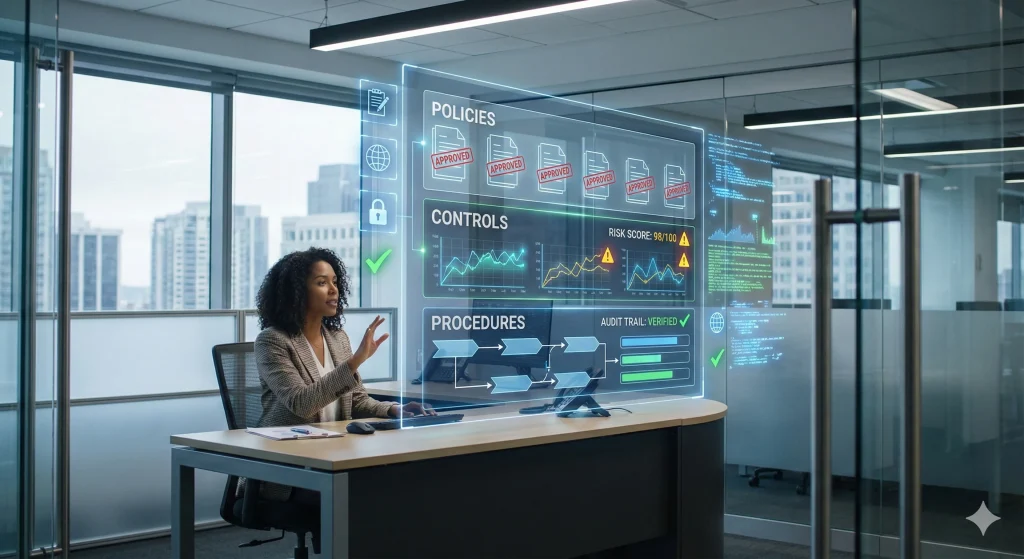
Policies, Controls, and Procedures (PCPs) form the core operational framework through which financial institutions implement their Anti-Money Laundering and Counter-Terrorist Financing (AML/CFT) obligations.
PCPs translate regulatory requirements, risk assessments, and governance expectations into actionable, repeatable, and auditable processes that prevent, detect, and respond to financial crime risks.
In AML/CFT contexts, PCPs provide the structure that ensures consistency of practice, accountability across business lines, and defensibility during supervisory examinations.
Well-designed PCPs reflect a risk-based approach, incorporate sector-specific typologies, and evolve continuously as criminal methodologies, regulations, and technology change.
Explanation
PCPs operate as an integrated system.
Policies articulate high-level intent, set expectations, and assign responsibility.
Controls operationalise those expectations through mechanisms that prevent or detect failures or illicit activity.
Procedures provide detailed, step-by-step guidance to staff on how to execute processes in a compliant and standardised manner.
In practice, AML/CFT PCPs govern the full lifecycle of customer relationships, transaction activity, escalations, and reporting obligations.
They also act as institutional artefacts demonstrating compliance maturity.
Regulators examine PCPs to evaluate whether an institution’s AML framework is proportionate to its risk exposure, current in relation to emerging typologies, and effective in real operational environments.
Weak, outdated, or inconsistently applied PCPs are a leading cause of enforcement actions, sanctions, and supervisory findings globally.
Conversely, strong PCPs combine clarity, risk orientation, governance, and auditable execution.
PCPs in AML/CFT Frameworks
PCPs are embedded across the AML/CFT ecosystem and directly support key regulatory requirements such as customer due diligence, ongoing monitoring, suspicious transaction reporting, sanctions compliance, and governance.
Core areas where PCPs play a critical role include:
- Enterprise-wide risk assessment design, ownership, and updates.
- KYC, EDD, onboarding, and customer lifecycle management.
- Beneficial ownership identification and verification.
- Transaction monitoring, behavioural analytics, and alert escalation.
- Sanctions screening, name matching, and resolution processes.
- Record-keeping, audit trails, and regulatory reporting standards.
- Roles and responsibilities across first, second, and third lines of defence.
- Technology governance including model validation and tuning.
Failure to maintain robust PCPs affects not only daily operations but also strategic relationships such as correspondent banking, investor confidence, and regulator trust.
Key Components of PCPs
Policies
AML/CFT policies establish the institution’s overarching obligations and expectations.
They typically include:
- Organisational commitment to AML/CFT compliance and financial integrity.
- Governance structures including board and senior management roles.
- Regulatory references and applicable legislative frameworks.
- Definitions of risk appetite, prohibited activities, and escalation thresholds.
- Requirements for CDD, EDD, beneficial ownership verification, and record retention.
- Sanctions screening expectations and cross-border obligations.
- Requirements for training, staffing, and internal reporting.
Policies must be approved at the appropriate governance level and reviewed regularly to reflect regulatory and risk developments.
Controls
Controls are the mechanisms that enforce the policy intent.
They may be automated, manual, detective, or preventive.
Examples include:
- Automated name and sanctions screening tools.
- Rule-based and machine-learning transaction monitoring systems.
- Segregation of duties to prevent conflicts of interest.
- Thresholds for reporting, escalation, or manual review.
- Workflows for alert triaging, investigation, and documentation.
- Access controls, audit logging, and cybersecurity safeguards.
- Independent model validation for monitoring and screening engines.
Sound controls ensure that compliance obligations are consistently met regardless of individual discretion or business pressure.
Procedures
Procedures provide the detailed, actionable steps required for staff to perform AML tasks.
They normally include:
- Standard operating steps for KYC onboarding.
- Stepwise processes for EDD cases or high-risk customer reviews.
- Guidance for interpreting red flags and raising internal reports.
- Documentation standards for investigations and SAR/STR reporting.
- Operational steps for sanctions hit resolution.
- Data collection requirements and evidence formats.
- Exception handling and escalation processes.
Procedures must be accessible, current, and written at the level required for consistent execution across teams and jurisdictions.
Risks & Red Flags Associated With Weak PCPs
Poor PCP design or execution introduces significant AML/CFT vulnerabilities.
Key risks include:
- Incomplete or inconsistent application of customer due diligence.
- Undefined escalation protocols resulting in delayed reporting.
- Insufficient documentation leading to audit failures.
- Overreliance on manual processes susceptible to human error.
- Outdated controls misaligned with emerging typologies.
- Excessive false positives or false negatives in monitoring models.
- Ambiguous workflows causing “ownership gaps” in risk management.
Red flags include:
- Staff uncertainty about process steps or decision authority.
- Repeated exceptions that circumvent standard controls.
- High investigation backlogs or unresolved alerts.
- Regulatory findings that processes are not followed in practice.
- Material differences between documented procedures and real operations.
Common Methods & Techniques for Misuse
Criminals exploit gaps in PCPs to introduce, layer, or integrate illicit proceeds.
Examples include:
- Using outdated onboarding procedures to bypass beneficial ownership verification.
- Exploiting weak monitoring controls to conduct structured transactions.
- Leveraging untrained frontline staff to open accounts without adequate documentation.
- Routing funds through business lines where process documentation is unclear.
- Taking advantage of poor sanctions resolution processes to avoid detection.
Weak PCPs create systemic blind spots that enable criminals to operate with limited detection risk.
Examples of PCP-Related Scenarios
CDD Breakdown Due to Outdated Procedures
A bank continues using a legacy onboarding checklist that does not include beneficial ownership verification for complex entities.
Criminal entities open accounts through nominee structures, bypassing modern controls.
Ineffective Monitoring Controls
An institution relies on static rules developed years earlier.
Criminals exploit these outdated thresholds by conducting transactions just below reporting criteria, avoiding alert generation.
Escalation Failure
Frontline employees detect unusual transactions but lack clear procedures for escalation. SAR/STR filings are delayed, resulting in regulatory action.
Sanctions Screening Gaps
An outdated name-matching algorithm fails to detect near-match variations of sanctioned entities.
The institution processes multiple prohibited transactions.
Impact on Financial Institutions
Weak PCPs negatively affect both regulatory standing and operational resilience:
- Enforcement actions, penalties, or consent orders may be imposed.
- Reputational damage and loss of correspondent banking relationships.
- Heightened remediation costs, including system upgrades and staff re-training.
- Increased operational friction due to inefficient or inconsistent processes.
- Reduced confidence from investors, partners, and supervisory authorities.
For institutions with strong PCPs, the benefits include enhanced resilience, predictable operations, and defensible compliance under regulatory scrutiny.
Challenges in Designing and Maintaining PCPs
Institutions face several obstacles in keeping PCPs effective and current:
- Rapid evolution of criminal typologies and geopolitical risks.
- Technology shifts, including digital assets, DeFi, and automated payment rails.
- Cross-border inconsistencies in regulatory expectations.
- Data availability, quality, and integration limitations.
- Resource constraints in compliance, technology, and governance teams.
- Cultural or organisational resistance to process standardisation.
Sustained effectiveness requires continuous monitoring, governance review, and risk-aligned updates.
Regulatory Oversight & Governance Expectations
Supervisors examine PCPs to evaluate whether the AML framework is risk-based, well-governed, and operationally embedded.
Expectations typically include:
- Board-approved AML policy updated regularly and aligned with regulations.
- Clear allocation of responsibility across first, second, and third lines of defence.
- Documented procedures supporting all key AML functions.
- Controls validated, tested, and updated based on risk.
- Evidence of training, competency, and ongoing awareness programmes.
- Documented model governance and independent validation.
- Ability to produce timely, accurate reporting and underlying documentation.
- Integration of PCPs into enterprise-wide risk assessments and audits.
Regulatory reviews often focus on whether PCPs function in practice, not merely on paper.
Importance of PCPs in AML/CFT Compliance
PCPs are essential to the integrity and effectiveness of AML/CFT programmes.
Strong PCPs allow institutions to:
- Embed AML/CFT obligations consistently across business operations.
- Detect and prevent suspicious or illicit activity.
- Maintain regulatory compliance and avoid enforcement actions.
- Ensure accountability, audit readiness, and transparency.
- Adapt to new risks with intelligence-led and technology-enabled updates.
- Support sustainable growth without compromising compliance standards.
In an increasingly digitised and high-velocity financial ecosystem, robust PCPs ensure that institutions can withstand scrutiny, manage risk, and operate with confidence.
Related Terms
- Internal Controls
- Governance Framework
- Customer Due Diligence
- Transaction Monitoring
- Risk-Based Approach
- Escalation Procedure
References
All URLs below are validated, direct, and active.
- FATF. International Standards on Combating Money Laundering and the Financing of Terrorism. FATF Recommendations
- BIS. Sound management of risks related to money laundering and financing of terrorism
- Wolfsberg Group. Wolfsberg Anti-Money Laundering Principles
- FinCEN. AML Program Requirements for Financial Institutions
- SEBI Master Circular on AML/CFT Obligations (India)
Ready to Stay
Compliant—Without Slowing Down?
Move at crypto speed without losing sight of your regulatory obligations.
With IDYC360, you can scale securely, onboard instantly, and monitor risk in real time—without the friction.