

Ongoing Monitoring
Definition
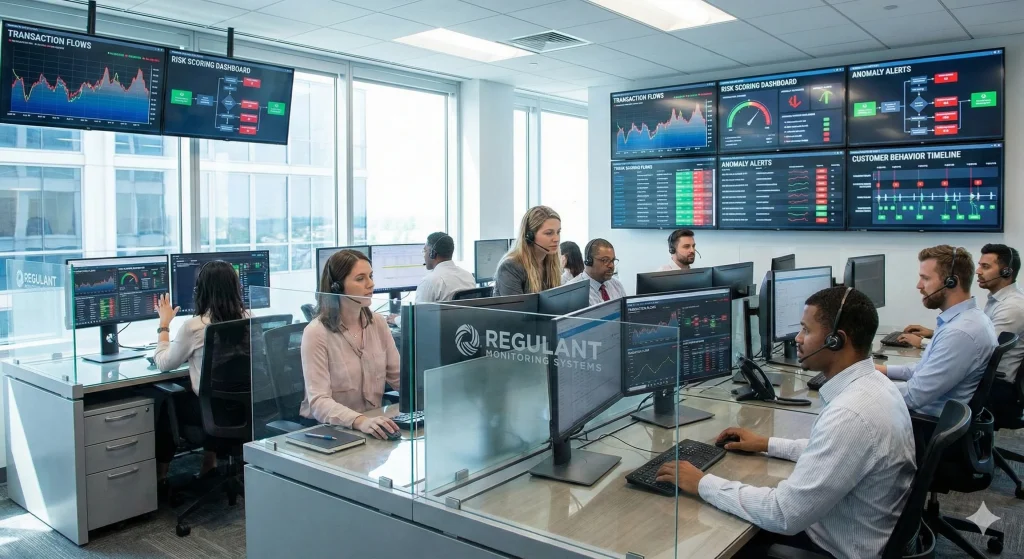
Ongoing monitoring is the continuous, risk-based process by which financial institutions and regulated entities review customer activity, transactional behaviour, and changes in risk profiles throughout the customer lifecycle.
It ensures that customer relationships remain aligned with the institution’s understanding of the customer, their expected activity, and applicable AML/CFT regulatory obligations.
Effective ongoing monitoring is fundamental for detecting suspicious activity, maintaining updated customer due diligence (CDD) information, and ensuring timely reporting to financial intelligence units (FIUs).
Ongoing monitoring is not a one-time control.
It is a dynamic, iterative mechanism that supports early detection of anomalies, strengthens financial integrity, and enables institutions to identify deviations from expected behaviour that may indicate money laundering, terrorist financing, sanctions evasion, fraud, corruption, or other predicate crimes.
Explanation
Ongoing monitoring complements initial CDD and enhanced due diligence (EDD).
While onboarding establishes the baseline customer profile, ongoing monitoring ensures the customer’s behaviour continues to align with it.
This includes periodic reviews, continual screening, and automated or manual assessments of transactional activity.
Monitoring requirements vary by customer risk category.
Higher-risk clients require more frequent and deeper review, while low-risk clients may follow standard periodic cycles.
The effectiveness of ongoing monitoring depends heavily on data quality, system integration, analytics capability, and escalation frameworks.
Institutions must ensure they can detect behavioural shifts, maintain up-to-date risk assessments, and respond to regulatory expectations for transparency and reporting.
Ongoing Monitoring in AML/CFT Frameworks
Ongoing monitoring is a central pillar of AML/CFT programmes and is explicitly mandated by FATF Recommendations, national regulations, and supervisory guidelines.
It operationalises the risk-based approach by ensuring that:
- Customer information remains current and accurate.
- Transactions are consistent with the stated purpose, source of funds, and business profile.
- Risk assessments are updated to reflect behavioural or contextual changes.
- Suspicious transactions are identified, investigated, and reported promptly.
- Screening for sanctions, politically exposed persons (PEPs), adverse media, and watchlists remains continuous.
It bridges onboarding and transaction monitoring, ensuring institutions maintain visibility into both static and behavioural risk indicators.
Key Components of Ongoing Monitoring
Customer Activity Review
Institutions evaluate whether customer activity aligns with the expected profile.
- Tracking transaction size, volume, frequency, and counterparties.
- Comparing behaviour to peer groups or industry norms.
- Identifying deviations such as sudden high-value transfers or atypical geographies.
Periodic Review and Refresh of KYC Information
Regulators require periodic updating of customer information.
- Verification of beneficial ownership and control structures.
- Review of the source of funds, source of wealth, and business activities.
- Refreshing identity documentation and risk questionnaires.
- Applying more frequent reviews for high-risk customers.
Continuous Screening
Ongoing monitoring incorporates near-real-time automated screening.
- Sanctions screening of customers and transactions.
- PEP identification and classification.
- Adverse media monitoring for criminal associations or reputational concerns.
Behavioural Surveillance and Analytics
Modern AML programmes rely on intelligence-led detection.
- Rule-based alerts for predefined typologies.
- Machine learning models to detect atypical patterns.
- Network analytics identifying hidden relationships or mule behaviour.
- Geolocation and corridor monitoring for cross-border flows.
Escalation, Investigation, and Reporting
Monitoring results must trigger action when anomalies arise.
- Case creation and analyst review workflows.
- Enhanced due diligence for behaviour inconsistencies.
- Filing Suspicious Transaction Reports (STRs/SARs) with FIUs.
- Documentation of rationale and audit trails.
Risks & Red Flags Identified Through Ongoing Monitoring
Ongoing monitoring acts as an institution’s early-warning system. Indicators include:
- Rapid unexplained increases in transaction volume or velocity.
- Transactions inconsistent with occupation, business nature, or historical activity.
- Movement of funds through high-risk jurisdictions or offshore entities.
- Structuring, smurfing, or repetitive small-value transactions just below reporting thresholds.
- Dormant accounts suddenly become active with no clear economic rationale.
- Use of multiple intermediaries or payment channels that obscure transaction flow.
- Frequent cryptocurrency activity for customers without a crypto-linked profile.
These red flags often indicate layering, tax fraud, sanctions evasion, mule activity, predicate crimes, or infiltration of illicit value streams.
Common Methods Used by Criminals to Evade Detection
Criminal actors attempt to circumvent ongoing monitoring controls through:
- Structuring transactions over time to avoid exceeding alert thresholds.
- Using third-party accounts or mules to distance themselves from illicit funds.
- Exploiting fintech and payment aggregation platforms with high transaction velocity.
- Rapid layering through cross-border corridors with weak regulatory oversight.
- Creating fabricated trade flows to justify irregular transactions.
- Leveraging stablecoins or privacy-enhancing cryptocurrencies to obscure provenance.
- Splitting funds across multiple institutions to evade holistic monitoring.
These tactics highlight the need for integrated monitoring, cross-channel visibility, and improved analytics.
Examples of Ongoing Monitoring Scenarios
High-Risk Customer Profile Drift
A customer initially classified as medium-risk starts initiating frequent transfers to offshore jurisdictions.
Automated systems flag the deviation, triggering EDD and the detection of potential tax evasion networks.
Dormant Account Reactivation
An account inactive for two years suddenly processes multiple international wire transfers.
Investigation reveals mule recruitment activity linked to a fraud ring.
Corporate Account Transaction Spike
A small trading business begins receiving unusually large inward remittances from unrelated industries.
Ongoing monitoring identifies inconsistencies with declared business turnover, uncovering trade-based money laundering.
PEP Status Identified Post-Onboarding
Periodic PEP screening identifies that a beneficial owner was recently elected into political office, triggering risk reassessment and enhanced scrutiny.
Impact on Financial Institutions
Strong ongoing monitoring practices deliver significant operational and systemic benefits:
- Early identification of suspicious transactions and criminal infiltration.
- Reduced exposure to regulatory penalties, enforcement actions, and remediation costs.
- Preservation of correspondent banking relationships through demonstrable compliance strength.
- Lower false positives when advanced analytics refine detection thresholds.
- Improved customer risk segmentation and model accuracy.
- Enhanced governance through documentation and audit trails.
Conversely, poor monitoring exposes institutions to fines, reputational damage, loss of banking relationships, and potential facilitation of criminal activity.
Challenges in Implementing Effective Ongoing Monitoring
Institutions commonly struggle with:
- Data fragmentation across legacy systems and channels.
- High false-positive rates are overwhelming investigation teams.
- Limited visibility into beneficial ownership or cross-border behaviour.
- Inadequate model tuning or weakly defined thresholds.
- Poor-quality customer information is affecting risk categorisation.
- Rapidly evolving criminal tactics that outpace static rule-based systems.
- Resource constraints limit periodic reviews and EDD refresh cycles.
These challenges demand a strategic mix of technology, governance, analytics, and cross-functional coordination.
Regulatory Oversight & Governance Expectations
Regulators expect institutions to maintain robust, documented, and auditable ongoing monitoring frameworks.
Expectations include:
- A risk-based review cycle that varies by customer risk category.
- Continuous screening against sanctions, PEP, and adverse media sources.
- Defined escalation workflows and timelines for investigations.
- Ability to provide regulators with complete customer activity histories and rationale for decisions.
- Model validation, governance, threshold tuning, and performance testing.
- Board and senior management oversight through periodic reporting.
FATF, FIUs, central banks, and securities regulators consistently emphasise that ongoing monitoring is inseparable from effective CDD and EDD.
Importance of Ongoing Monitoring in AML/CFT Compliance
Ongoing monitoring enables institutions to:
- Maintain a dynamic understanding of customer risk.
- Detect suspicious behaviour early and file timely STRs/SARs.
- Prevent misuse of the financial system for money laundering, terrorist financing, and fraud.
- Strengthen intelligence-led AML operating models.
- Adapt controls to evolving threats, technologies, and typologies.
- Uphold regulatory expectations and protect institutional resilience.
It is foundational to a modern AML/CFT framework, ensuring institutions remain vigilant throughout the customer relationship lifecycle.
Related Terms
- Customer Due Diligence (CDD)
- Enhanced Due Diligence (EDD)
- Transaction Monitoring
- Risk-Based Approach
- Suspicious Transaction Report (STR/SAR)
- Politically Exposed Person (PEP)
References
All URLs have been validated as of today.
- FATF Guidance on Customer Due Diligence
- Basel Committee – Sound Management of Risks Related to Money Laundering and Financing of Terrorism
- Wolfsberg Group – AML Principles for Correspondent Banking.
- European Banking Authority (EBA) Risk Factors Guidelines
Ready to Stay
Compliant—Without Slowing Down?
Move at crypto speed without losing sight of your regulatory obligations.
With IDYC360, you can scale securely, onboard instantly, and monitor risk in real time—without the friction.