

High-Risk Jurisdiction
Definition
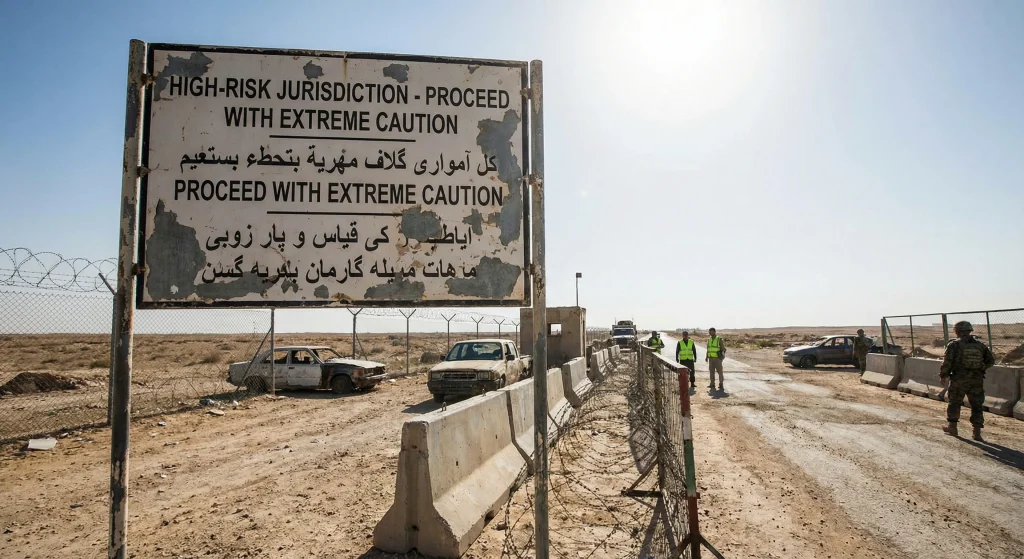
A high-risk jurisdiction is a country, territory, or region identified as having significant strategic deficiencies in its anti–money laundering, counter-terrorist financing, or counter-proliferation financing frameworks.
These deficiencies may include weak regulatory oversight, limited enforcement capabilities, pervasive corruption, inadequate financial controls, or the presence of active criminal and terrorist networks operating within its borders.
In AML/CFT contexts, transactions, customers, or business relationships involving high-risk jurisdictions require enhanced due diligence, intensified monitoring, and stricter risk-mitigation measures.
The designation may be issued by international bodies such as the Financial Action Task Force (FATF), national regulators, or internal institutional risk frameworks.
High-risk jurisdictions pose elevated exposure to money laundering, terrorist financing, proliferation financing, and other financial crime threats due to structural vulnerabilities in governance, regulation, and law enforcement.
Explanation
High-risk jurisdictions create systemic vulnerabilities throughout the global financial ecosystem.
They may lack comprehensive AML/CFT legislation, fail to enforce controls, or allow financial secrecy that enables illicit flows.
Criminal networks, shell companies, corrupt officials, and extremist groups often exploit these jurisdictions due to lax oversight and weak cross-border cooperation.
Designations of high-risk jurisdictions are dynamic, reflecting evolving geopolitical, regulatory, and economic landscapes.
Institutions must adapt continuously to these changes to remain compliant with global regulatory standards.
A jurisdiction may be considered high-risk due to factors such as:
- Political instability or weak governance structures.
- Inadequate supervision of financial institutions and designated non-financial businesses and professions (DNFBPs).
- High incidence of corruption or criminal infiltration of state functions.
- Insufficient beneficial ownership transparency.
- Weapon, nuclear, or dual-use technology proliferation threats.
- Terrorist safe havens or known extremist financing corridors.
International bodies maintain lists of jurisdictions requiring enhanced due diligence or subject to counter-measures.
These lists influence institutional risk appetites, customer onboarding rules, sanctions exposure, and transaction monitoring strategies.
High-risk jurisdiction exposure is a major driver of AML/CFT investigations, sanctions screening alerts, correspondent banking challenges, and FIU reporting obligations.
High-Risk Jurisdiction in AML/CFT Frameworks
High-risk jurisdictions intersect with AML/CFT controls across multiple layers of institutional compliance.
The designation influences customer acceptance, transaction monitoring, sanctions alignment, and overall financial crime risk management.
Key intersections include:
Customer Due Diligence (CDD)
Customers linked to high-risk jurisdictions require additional scrutiny due to increased exposure to financial crime risks. Institutions must validate customer identity, business activity, and the legitimacy of cross-border engagements.
Enhanced Due Diligence (EDD)
EDD becomes mandatory when customers, beneficial owners, or transactions involve high-risk jurisdictions. EDD measures may include:
- Verification of source of funds and source of wealth.
- Detailed understanding of purpose and nature of the relationship.
- Identification of political exposure or corruption risk.
- Analysis of ownership structures to uncover hidden beneficial owners.
Transaction Monitoring
Transactions to, from, or involving high-risk jurisdictions require heightened monitoring.
This includes detection of:
- Unusual cross-border transfers.
- Rapid movement of funds between high-risk regions.
- Transactions inconsistent with customer profiles.
- Payments involving high-risk third-party intermediaries.
Sanctions and Watchlist Alignment
Many high-risk jurisdictions overlap with sanctioned or partially sanctioned countries.
Screening must capture:
- Country-level sanctions,
- Sector-based restrictions,
- Individual and entity designations,
- Terrorist or proliferation financing risks.
Correspondent Banking Risk
Correspondent relationships with institutions in high-risk jurisdictions carry heightened exposure to:
- Weak AML/CFT controls at the respondent bank,
- Nested correspondent arrangements,
- Illicit payment chains masking originators or beneficiaries.
Regulatory Reporting
Institutions must file suspicious activity or suspicious transaction reports if transactions linked to high-risk jurisdictions demonstrate unusual or unexplained patterns.
These reports often require detailed supporting documentation due to geopolitical sensitivity.
Key Characteristics of High-Risk Jurisdictions
High-risk jurisdictions frequently demonstrate structural gaps that create opportunities for illicit financial activity.
Common characteristics include:
Weak Legal and Regulatory Frameworks
- Lack of comprehensive AML/CFT laws.
- Limited enforcement powers for regulators.
- Outdated financial crime legislation.
Financial Secrecy and Opacity
- Absence of beneficial ownership registers.
- Use of anonymous companies or trusts.
- Resistance to international information-sharing agreements.
High Levels of Corruption
- Systemic corruption within law enforcement or judiciary.
- Political interference in regulatory processes.
- Wide use of bribery to facilitate financial crime.
Terrorist and Criminal Networks
- Presence of organised crime groups.
- Operation of terrorist financing corridors.
- Weak border and customs controls facilitating illicit flows.
Poor Risk Mitigation Infrastructure
- Inadequate supervision of banks and DNFBPs.
- Insufficient suspicious transaction reporting.
- Lack of financial intelligence capacities.
Examples of High-Risk Jurisdiction Scenarios
Terrorist Financing Through Conflict Zones
A charity based in a high-risk jurisdiction transfers funds to regions controlled by extremist groups.
The weak oversight in both the originating and recipient jurisdictions enables diversion of funds to terrorist networks.
Shell Company Networks in Secrecy Jurisdictions
A beneficial owner establishes multiple shell companies in a jurisdiction with minimal transparency requirements.
These entities are used to layer illicit proceeds through a series of obscured transactions.
Proliferation Financing via Front Companies
A trading firm routes dual-use goods through a high-risk jurisdiction known for weak export controls.
The goods are ultimately diverted to a sanctioned proliferator.
Corrupt Political Exposure
A politically exposed person (PEP) from a high-risk jurisdiction moves large funds into foreign accounts, citing business income.
Transaction reviews reveal links to state corruption and embezzlement.
High-Risk Casino and DNFBP Activity
A jurisdiction with lax controls over casinos, real-estate agencies, and dealers in precious metals becomes a hotspot for money laundering through high-value purchases and cash transactions.
Impact on Financial Institutions
High-risk jurisdictions create numerous operational, compliance, and reputational challenges for institutions.
Regulatory Compliance Pressure
Institutions face strict obligations when dealing with high-risk jurisdictions.
Failure to implement appropriate controls may result in enforcement actions, remediation requirements, or financial penalties.
Increased Operational Burden
EDD measures, documentation reviews, and heightened investigations place significant strain on compliance teams.
High-risk jurisdiction alerts frequently require multi-layered reviews.
Reputational Damage
Associating with customers or transactions involving high-risk jurisdictions can reduce institutional credibility with regulators, investors, and correspondent banks.
Financial Crime Exposure
High-risk jurisdictions are often linked to:
- Laundering networks,
- Terrorist financing pipelines,
- Corrupt state actors,
- Illegal arms networks,
- Human trafficking routes.
Institutions dealing with these jurisdictions face elevated exposure to financial crime typologies.
Correspondent Banking Challenges
Many global banks de-risk or terminate relationships with institutions in high-risk jurisdictions.
This may disrupt payments, trade finance, and cross-border operations.
Challenges in Managing High-Risk Jurisdiction Exposure
Managing exposure to high-risk jurisdictions is complex and requires multidimensional controls.
Dynamic Global Risk Landscape
- Jurisdictions may be added or removed from the FATF lists frequently.
- Geopolitical changes alter risk scoring rapidly.
Data Quality and Information Gaps
- Inconsistent or incomplete information on beneficial ownership.
- Difficulty obtaining KYB documentation from high-risk regions.
Limited On-Ground Verification
- Remote locations or conflict zones restrict verification of customer activities.
- Institutions may lack local intelligence on risk exposures.
Regulatory Inconsistencies
- Variations in national AML/CFT rules complicate global compliance.
- Some jurisdictions lack supervisory capacity altogether.
Risk of Over-De-Risking
- Excessive avoidance of high-risk jurisdictions may limit financial inclusion.
- Regulators encourage risk-based management, not wholesale disengagement.
Regulatory Oversight & Governance
Financial Action Task Force (FATF)
FATF maintains two influential lists:
- Jurisdictions under increased monitoring (the “grey list”),
- High-risk jurisdictions subject to a call for action (the “black list”).
Institutions must factor these lists into their risk management frameworks.
Regional Bodies and Supervisors
- Asia/Pacific Group on Money Laundering (APG),
- Middle East & North Africa Financial Action Task Force (MENAFATF),
- Caribbean FATF (CFATF),
- MONEYVAL.
These bodies provide evaluations that influence jurisdiction risk ratings.
National Regulatory Authorities
National central banks, financial regulators, and supervisory bodies may assign jurisdictional risk ratings that institutions must follow.
Financial Intelligence Units (FIUs)
FIUs monitor cross-border suspicious flows and advise on emerging threats linked to high-risk jurisdictions.
Sanctions Authorities
Organisations such as OFAC, the EU, and the UN Security Council frequently impose sanctions on jurisdictions with elevated financial crime risks.
Importance of Managing High-Risk Jurisdiction Risk in AML/CFT Compliance
High-risk jurisdictions significantly shape global AML/CFT strategies due to the elevated threat they pose.
Effective management of exposure to these jurisdictions enables institutions to:
- Protect themselves from cross-border criminal networks,
- Comply with international regulatory expectations,
- Safeguard correspondent banking relationships,
- Mitigate sanctions and reputational risk,
- Enhance the quality of financial intelligence reports.
Intelligence-driven architectures, such as IDYC360’s intelligence-first AML framework, help institutions operationalise high-risk jurisdiction controls by integrating dynamic risk scoring, behavioural analytics, and cross-border intelligence data.
By adopting a risk-based, continuously updated approach, institutions can maintain resilience and compliance while supporting legitimate global financial activity.
Related Terms
- Enhanced Due Diligence
- Sanctions Screening
- Jurisdiction Risk Rating
- Beneficial Ownership
- Correspondent Banking
- Proliferation Financing
- Terrorist Financing
References
- FATF – High-Risk Jurisdictions Subject to a Call for Action
- MONEYVAL – Mutual Evaluations
- OFAC – Sanctions Programs and Country Information
https://ofac.treasury.gov/sanctions-programs-and-country-information - APG – Mutual Evaluation Reports
Ready to Stay
Compliant—Without Slowing Down?
Move at crypto speed without losing sight of your regulatory obligations.
With IDYC360, you can scale securely, onboard instantly, and monitor risk in real time—without the friction.