

GRC: Governance, Risk & Compliance
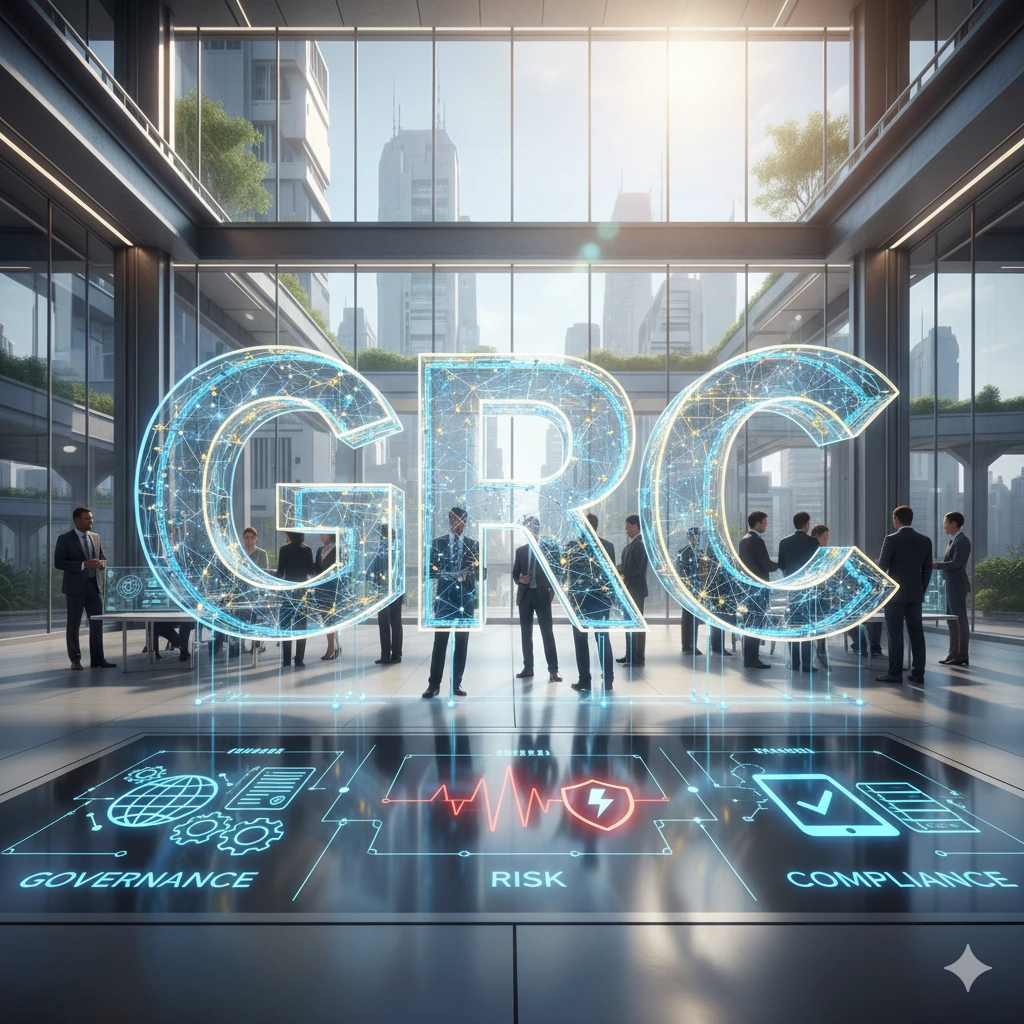
Definition
Governance, Risk and Compliance (GRC) refers to the integrated framework through which organisations structure their leadership, manage enterprise risks, and ensure adherence to regulatory, legal, and internal policy requirements.
GRC strengthens institutional integrity by aligning strategic objectives with risk-informed decision-making and compliant operational practices.
In AML/CFT contexts, GRC ensures that financial institutions establish sound governance structures, implement risk-based controls, and maintain ongoing compliance with anti-money laundering and counter-terrorist financing regulations.
It provides the organisational foundation for preventing illicit financial activity, ensuring accountability, and demonstrating regulatory alignment.
Explanation
GRC brings together three core pillars that operate in unison to support institutional resilience:
- Governance ensures that leadership provides direction, oversight, ethical principles, and accountability structures.
- Risk Management identifies, assesses, monitors, and mitigates threats that may impede strategic or operational objectives.
- Compliance ensures adherence to laws, regulations, industry standards, and internal policies.
Modern financial institutions increasingly adopt unified GRC models rather than treating governance, risk, and compliance as independent functions.
A cohesive GRC framework ensures that controls are consistently applied, risks are evaluated in context, and regulatory expectations are met across the entire institution.
In AML/CFT ecosystems, GRC plays a critical role in:
- Maintaining robust oversight over financial crime risks.
- Ensuring that policies and procedures meet global regulatory standards.
- Facilitating cross-functional collaboration between compliance, risk, legal, operations, and technology teams.
- Reducing operational gaps and ensuring consistent application of AML/CFT controls.
As regulatory environments become more complex and cross-border expectations increase, organisations rely on mature GRC frameworks to manage exposure and maintain institutional credibility.
GRC in AML/CFT Frameworks
Within AML/CFT, the GRC model acts as an overarching architecture that integrates financial crime compliance into the institution’s strategic planning, risk assessment processes, and operational execution.
Governance in AML/CFT
Governance establishes the structure, oversight, and culture that guide AML/CFT compliance.
Effective governance ensures:
- Clear accountability across the three lines of defence.
- Senior management and board-level visibility into AML/CFT risks.
- Independent oversight of financial crime operations.
- Ethical and responsible business conduct.
- Adequate investment in systems, staffing, and training.
Risk Management in AML/CFT
Risk management ensures that AML/CFT risks are identified, categorised, measured, and mitigated.
This includes:
- Structured enterprise-wide AML/CFT risk assessments.
- Customer risk rating methodologies.
- Product and channel risk evaluation.
- Geographic and sanctions exposure assessments.
- Ongoing monitoring of emerging financial crime typologies.
Compliance in AML/CFT
Compliance ensures adherence to AML/CFT laws, regulatory expectations, internal policies, and global standards.
Institutions must:
- Implement robust KYC, CDD, and EDD processes.
- Monitor transactions for suspicious activity.
- Conduct sanctions and watchlist screening.
- File regulatory reporting on a timely basis.
- Maintain audit-ready documentation and recordkeeping.
Through the GRC framework, AML/CFT becomes not just a regulatory requirement but a strategic pillar of operational resilience and institutional trust.
Core Components of a GRC Framework
Governance Structure
A strong governance model provides the organisational foundation for risk and compliance functions.
Typical components include:
- A defined board and senior management oversight model.
- Dedicated committees for compliance, risk, and audit.
- Clear reporting lines for AML/CFT roles and responsibilities.
- Ethical conduct frameworks and whistleblower protections.
Risk Management Framework
A risk management framework ensures consistent identification and mitigation of threats.
Key elements include:
- Enterprise risk assessments.
- Risk appetite statements.
- Risk controls and mitigation strategies.
- Risk monitoring and reporting systems.
- Predictive and data-driven risk analytics.
Compliance Management System
Compliance frameworks ensure the organisation adheres to regulatory and internal requirements.
These frameworks include:
- Regulatory change management processes.
- AML/CFT program design and maintenance.
- Internal controls aligned with risk levels.
- Training and awareness programs.
- Testing and quality assurance mechanisms.
Integrated Technology Infrastructure
GRC increasingly relies on technology to automate, monitor, and streamline processes.
Effective systems include:
- Case management tools.
- Transaction monitoring platforms.
- Sanctions and watchlist engines.
- Regulatory reporting automation.
- Data governance platforms.
Examples of GRC Scenarios in AML/CFT
Board Oversight Failure
An institution faces regulatory penalties because its board failed to review updates to AML/CFT risk assessments or approve necessary policy changes.
Breakdown in Regulatory Change Management
Regulators introduce new sanctions rules, but the organisation’s GRC process fails to update its screening system.
Resulting violations trigger enforcement actions.
Inaccurate Customer Risk Ratings
Weak risk assessment methodologies lead to misclassification of high-risk customers, causing missed suspicious activity indicators.
Internal Policy Conflicts
Compliance policies require enhanced due diligence for specific high-risk geographies, but operational teams do not update customer onboarding procedures accordingly.
The gap exposes the institution to regulatory risk.
Inadequate Training and Awareness
Frontline staff fail to identify red flags due to insufficient AML/CFT training. GRC processes highlight the training gap and drive corrective action.
Failure in Third-Party Risk Management
A payment partner or fintech collaborator does not meet AML/CFT requirements.
Due to weak third-party governance controls, the institution becomes exposed to indirect risks.
Impact on Financial Institutions
A well-designed GRC framework enhances operational efficiency, regulatory compliance, and institutional resilience.
Key impacts include:
Strengthened AML/CFT Compliance
Institutions with mature GRC frameworks maintain strong alignment with AML laws, regulatory expectations, and audit requirements.
Improved Risk Visibility
Consolidated risk dashboards and reporting systems help leadership understand emerging risks, enabling informed decision-making.
Operational Efficiency
Integrated GRC systems reduce duplication, eliminate silos, and streamline investigations, reporting, and oversight processes.
Reduced Regulatory Penalties
GRC helps institutions proactively identify gaps and correct issues before they result in regulatory enforcement.
Enhanced Trust and Institutional Reputation
Strong GRC practices reinforce trust with customers, investors, regulators, and correspondent banking partners.
Better Cross-Functional Collaboration
GRC frameworks unify compliance, risk, legal, operations, cybersecurity, and technology teams under common governance and reporting structures.
Challenges in Managing GRC
While GRC provides significant benefits, institutions often face operational and strategic challenges when implementing comprehensive frameworks.
Siloed Organisational Structures
- Departments may operate independently, causing inconsistent application of AML/CFT controls.
- Legacy cultural barriers impede communication between risk, compliance, and operations.
Data and System Fragmentation
- Incomplete or inaccurate data creates blind spots in AML/CFT monitoring.
- Multiple systems generate inconsistent reporting and risk scores.
Increasing Regulatory Complexity
- New AML/CFT laws, cross-border sanctions, and technology-driven obligations increase compliance burdens.
Resource Constraints
- Understaffed or underfunded compliance functions struggle to maintain effective controls.
- Subject matter expertise gaps weaken risk assessment quality.
Ineffective Change Management
- Slow policy updates delay alignment with evolving regulatory expectations.
- Weak training processes reduce staff readiness.
Third-Party and Outsourcing Risks
- External partners, fintech collaborators, and service providers introduce new layers of risk.
- Institutions must ensure their partners maintain equivalent AML/CFT standards.
Regulatory Oversight & Governance
Financial Action Task Force (FATF)
FATF sets global standards for AML/CFT, including governance, risk management, and compliance expectations. Institutions must align their GRC frameworks with FATF recommendations.
National Regulators and Supervisory Authorities
Supervisory bodies such as central banks, financial authorities, and securities regulators enforce AML/CFT compliance standards and assess governance maturity.
Financial Intelligence Units (FIUs)
FIUs oversee suspicious transaction reporting obligations and evaluate the quality of institutional compliance frameworks.
External Auditors and Independent Review Bodies
Independent auditors conduct annual or periodic reviews of AML/CFT programs, risk assessments, governance structures, and overall regulatory compliance.
Industry Standards and Best Practice Bodies
Entities such as the Basel Committee on Banking Supervision (BCBS) and the Institute of Internal Auditors (IIA) publish guidance relevant to effective GRC frameworks.
Importance of GRC in AML/CFT Compliance
GRC serves as an essential backbone for AML/CFT programs. Without strong governance, risk management, and compliance foundations, financial institutions cannot effectively mitigate financial crime risks or meet regulatory expectations.
Institutions with robust GRC frameworks:
- Implement risk-based AML/CFT controls across all operations.
- Detect and respond to emerging financial crime threats quickly.
- Maintain audit-ready documentation and regulatory alignment.
- Reduce the likelihood of violations, penalties, and reputational damage.
- Build a culture of integrity and responsibility across all functions.
Within intelligence-first AML architectures such as IDYC360, GRC provides the orchestration layer that ensures risk intelligence, technology, analytics, and compliance operations operate cohesively.
Related Terms
- Risk Management
- Compliance
- Enterprise Risk Assessment
- Internal Controls
- Regulatory Oversight
- Audit and Assurance
- AML/CFT Governance
References
- FATF – International Standards on AML/CFT
- Basel Committee on Banking Supervision – Corporate Governance Principles
- Institute of Internal Auditors – Governance and Risk Guidance
- UK Financial Conduct Authority – Governance and Risk Requirements
Ready to Stay
Compliant—Without Slowing Down?
Move at crypto speed without losing sight of your regulatory obligations.
With IDYC360, you can scale securely, onboard instantly, and monitor risk in real time—without the friction.