

Grantor
Definition
A grantor is an individual, organisation, institution, or governing body that provides financial assets, funding, endowments, or grants to recipients for specific purposes such as development projects, charitable activities, humanitarian programmes, research initiatives, or corporate sponsorships.
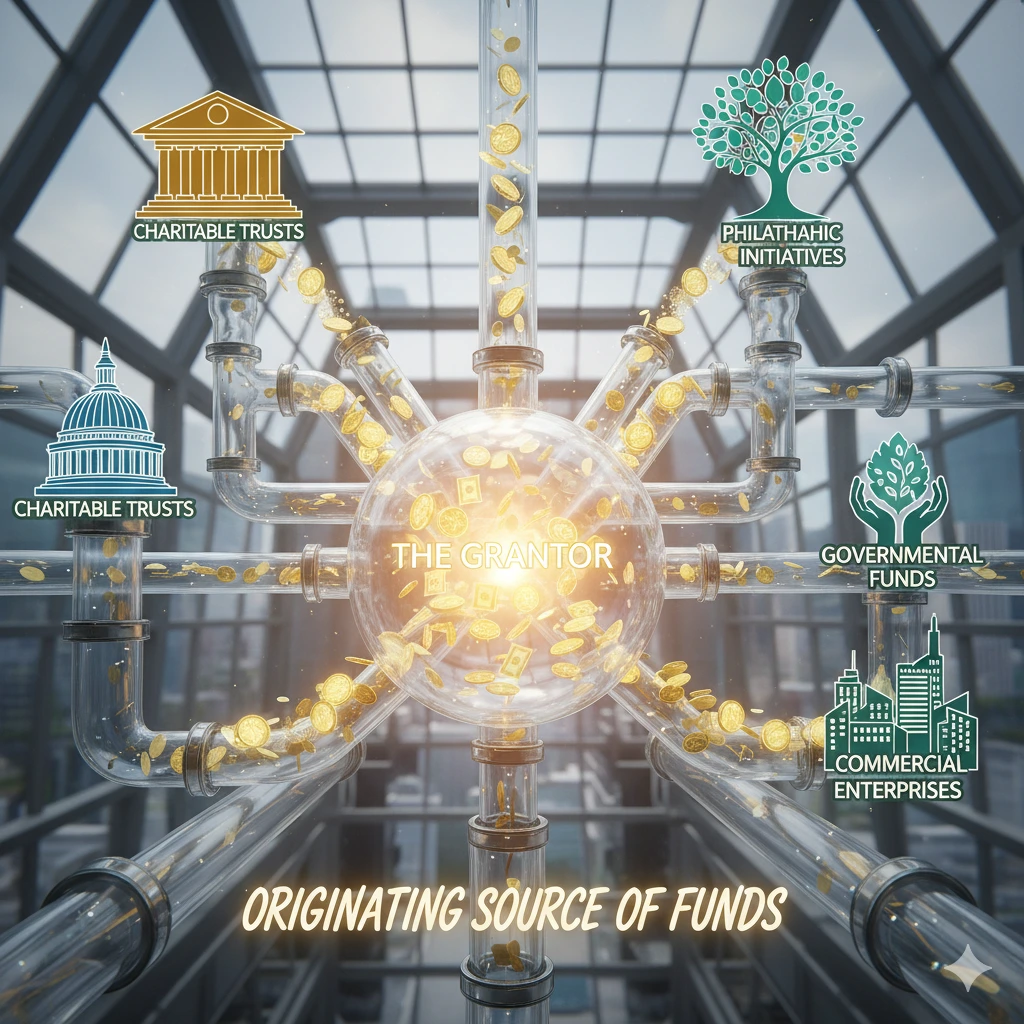
In the AML/CFT domain, a grantor plays a critical role as the originating source of funds moving through charitable, governmental, philanthropic, or commercial ecosystems.
Grantors may include governments, multilateral institutions, foundations, donor agencies, corporations, trusts, high-net-worth individuals, or international NGOs.
Their contributions can take the form of financial grants, material assistance, or structured project funding.
From a risk-management perspective, institutions must identify and verify the legitimacy, purpose, and flow of funds originating from grantors to prevent misuse for money laundering, terrorist financing, fraud, or proliferation financing.
Explanation
Grantors influence financial integrity within donor-funded environments because the origin, flow, and purpose of their funds shape risk exposure.
In AML/CFT frameworks, identifying the grantor and understanding their intentions, governance, and due diligence practices is crucial.
Funds originating from grantors may pass through multiple layers, including implementing partners, subcontractors, field offices, or local beneficiaries, making them vulnerable to diversion, abuse, or laundering.
Legitimate grantors maintain structured oversight processes, compliance checks, and reporting mechanisms.
However, fraudulent or opaque grantors may use the grant-making process to introduce illicit funds into the financial system under the guise of sponsorship, charitable giving, or development work.
Financial institutions must therefore evaluate:
- The legitimacy of the grantor.
- The source of funds.
- The stated objectives of the grant.
- The geographic risk profile of the funded activity.
- The integrity of the distribution chain.
Grantors can also be exploited unknowingly if criminal actors perceive weaknesses in governance, monitoring, or verification.
Projects operating in conflict zones, sanctioned territories, or areas with limited oversight face higher exposure, requiring stronger controls and due diligence.
Grantor in AML/CFT Frameworks
Grantors intersect with AML/CFT requirements at multiple levels.
They serve as the initial origin point of funds and, therefore, represent a key element of financial transparency and risk management.
Financial institutions must link grantor analysis with customer due diligence, transactional controls, and suspicious reporting.
Risk-Based Classification
Grantors must be assessed based on multiple risk dimensions, including:
- Geographic footprint and activities.
- Nature of the grant-funded projects.
- Complexity of the disbursement structure.
- Links to high-risk sectors such as NGOs, political organisations, or defence-related initiatives.
- Exposure to corruption-prone environments.
Customer Due Diligence (CDD) And Enhanced Due Diligence (EDD)
Where grantors are customers, donors, or partners, institutions must conduct appropriate CDD to confirm identity, ownership structure, and purpose. EDD may apply when grantors operate in high-risk jurisdictions or channel funds through opaque structures.
Transaction Monitoring
Grantor-funded transactions may involve multiple transfers, staged payments, or reimbursement cycles.
Transaction monitoring systems must identify:
- Unusual disbursement patterns.
- Sudden increases in funding.
- Payments deviating from typical grant schedules.
- Transfers to newly created or unverified partner organisations.
Screening and Sanctions Alignment
Grantors, particularly large foundations or international donors, may have associate entities, trustees, or board members requiring sanctions, watchlist, or politically exposed persons (PEP) screening.
Screening must apply to:
- Grantor identity.
- Funding partners.
- Contractors and delivery channels.
Fraud and Misappropriation Controls
Grantor-funded ecosystems face risks such as grant diversion, fake project reporting, inflated invoices, or ghost beneficiaries.
Fraud engines and AML monitoring must operate cohesively to detect:
- Fabricated project expenses.
- Round-tripping of funds.
- Abnormal cash withdrawals.
- Unexplained vendor payments.
Key Components Of Grantor-Related Risk
Financial institutions must understand the components that shape grantor risk exposure.
Governance Structure
Grantors with weak governance are more vulnerable to financial crime.
Indicators include:
- Limited oversight over fund utilisation.
- Lack of independent audits.
- Concentration of authority in a few individuals.
- Infrequent board oversight meetings.
Source Of Funds
Understanding how grantors acquire their funds is essential.
High-risk signals include:
- Unexplained wealth.
- Complex offshore structures.
- Inconsistent financial statements.
- Funds linked to high-risk industries.
Disbursement Mechanisms
Grantors may use diverse channels, such as:
- Direct bank transfers.
- Cash-based support.
- Cross-border disbursements.
- Intermediary organisations.
Each mechanism carries different financial crime risks.
Project-Level Vulnerabilities
Even when grantors are legitimate, funded projects may expose institutions to risk, particularly when they involve:
- Conflict zones.
- Regions under weak governance.
- Areas prone to corruption or terrorism.
- Cash-intensive distribution systems.
Examples Of Grantor Scenarios
Legitimate Government Donor With Complex Channels
The national government funds an international humanitarian programme.
The funds move through multiple partner NGOs before reaching beneficiaries in remote areas.
A financial institution must monitor disbursements for abnormalities, including:
- Excessive cash withdrawals.
- Unexplained reimbursements.
- Transfers to unregistered partners.
Corporate Foundation Funding High-Risk Projects
A corporate foundation provides grants to environmental projects in high-risk jurisdictions.
Transaction monitoring detects rapid pass-through payments to unrelated third parties, raising concerns about diversion or laundering.
Fraudulent Grantor Front Organisation
A fraudulent organisation poses as a donor agency and offers grants to small NGOs.
These NGOs unknowingly become conduits for laundering when the funds originate from criminal networks.
Grant Diversion In Conflict Zones
A humanitarian grantor funds medical relief in a conflict region.
Funds are manipulated by intermediaries aligned with extremist groups.
Financial institutions identify unusual routing of funds and inconsistent documentation.
High-Net-Worth Individual Grantor With Opaque Funds
A wealthy individual provides grants to community organisations. CDD reveals an unclear source of wealth and offshore assets, necessitating enhanced due diligence and monitoring.
Impact On Financial Institutions
Grantors directly influence operational, regulatory, and reputational risks within financial institutions.
Regulatory Risk
Institutions associated with illicit grantors face regulatory investigations, penalties, remediation mandates, and potential sanctions breaches.
Operational Risk
Grantor-related activities may trigger heightened monitoring requirements, creating additional workload for compliance teams.
Investigations may involve multiple entities, jurisdictions, and currencies.
Reputational Risk
Supporting illicit or negligent grantors can damage the reputation of financial institutions, donors, and partner organisations.
Exposure To Financial Crime Typologies
Grantors may be linked to typologies such as:
- Grant fraud.
- Terrorist financing.
- Proliferation financing.
- Cross-border laundering.
- Procurement manipulation.
Suspicious Transaction Reporting
Financial institutions must file STRs when detecting unusual activities involving:
- Inconsistent grant disbursements.
- Funds flowing to high-risk NGOs.
- Large transfers lacking project documentation.
- Round-tripping patterns through intermediaries.
Challenges In Managing Grantor Risk
Opaque Ownership And Governance
Some grantors, especially private foundations or offshore entities, provide limited visibility into beneficial owners.
Cross-Border Complexity
Grant-funded projects often span multiple countries, creating challenges in tracking fund flow and verifying partner legitimacy.
Weak Oversight In Certain Sectors
Sectors such as education, humanitarian relief, and cultural programmes may lack rigorous financial controls, increasing vulnerability.
Limited Transparency In High-Risk Regions
Political instability or conflict reduces the reliability of documentation, creating opportunities for financial abuse.
Digital and Crowdfunding Risks
Grantors increasingly use digital platforms, exposing ecosystems to online fraud, false grant offers, and impersonation schemes.
Regulatory Oversight & Governance
Financial Action Task Force (FATF)
FATF provides guidance on nonprofit sector vulnerabilities, beneficial ownership transparency, and preventive measures applicable to grantors and grantees.
National Regulators and Ministries
Regulatory authorities oversee grant-making bodies, foundations, and trusts, ensuring adherence to financial reporting, governance, and audit requirements.
Development Agencies
International bodies such as the World Bank, UN agencies, and regional development banks establish strict governance, procurement, and AML controls for grant-funded operations.
Charity Commissions and Foundation Registries
These bodies manage the registration, oversight, and compliance of charitable grant-making entities within national frameworks.
Financial Intelligence Units (FIUs)
FIUs collect and analyse suspicious reports involving grant activity and partners, disseminating intelligence to law enforcement.
Importance Of Grantor Controls In AML/CFT Compliance
Understanding and assessing grantors is essential for preventing the misuse of funds within financial channels.
Strong grantor-related controls help institutions:
- Prevent illicit fund introduction through grants.
- Identify fraudulent or opaque grantors.
- Monitor high-risk disbursement chains.
- Detect diversion linked to laundering or terrorism.
- Ensure safe, integrity-led fund distribution.
- Maintain regulatory alignment and reduce exposure to penalties.
Grantor controls also support institutional resilience by ensuring that donor-funded ecosystems remain transparent, traceable, and accountable.
Integrating these controls into intelligence-led AML architectures, such as IDYC360’s intelligence-first framework, strengthens the detection of emerging risks and enhances end-to-end financial crime management.
Related Terms
- Grant Recipient
- Beneficial Ownership
- Charity Fraud
- Sanctions Screening
- Enhanced Due Diligence
- Nonprofit Organisation Risk
- Funding Disbursement Controls
References
- FATF – Guidance On Non-Profit Organisations
- World Bank – Governance And Anti-Corruption Resources
- UK Charity Commission – Grant-Making Guidance
- UNDP – Funding And Programme Governance
Ready to Stay
Compliant—Without Slowing Down?
Move at crypto speed without losing sight of your regulatory obligations.
With IDYC360, you can scale securely, onboard instantly, and monitor risk in real time—without the friction.